The Wallet Tracker You Never Have to Charge: Sealed Battery vs. Rechargeable — What's Actually Better?
By InCard Team · July 21, 2026 · 8 min read
The Wallet Tracker You Never Have to Charge: Sealed Battery vs. Rechargeable — What's Actually Better?
If you've ever pulled your wallet tracker out before a trip and found it dead, you already know the answer. A wallet tracker that needs charging defeats its own purpose: the whole point is that it's always there, always on, always ready. InCard Finder uses a sealed, non-rechargeable Lithium-MnO2 battery rated for up to five years on Google Find Hub (up to three years on Apple Find My). You put it in your wallet. You forget about it. That's the entire maintenance schedule.
But "sealed battery" sounds like a limitation, not a feature — so it's worth understanding exactly what you're trading and what you're gaining before you decide.
Why Wallet Trackers and Charging Don't Mix Well
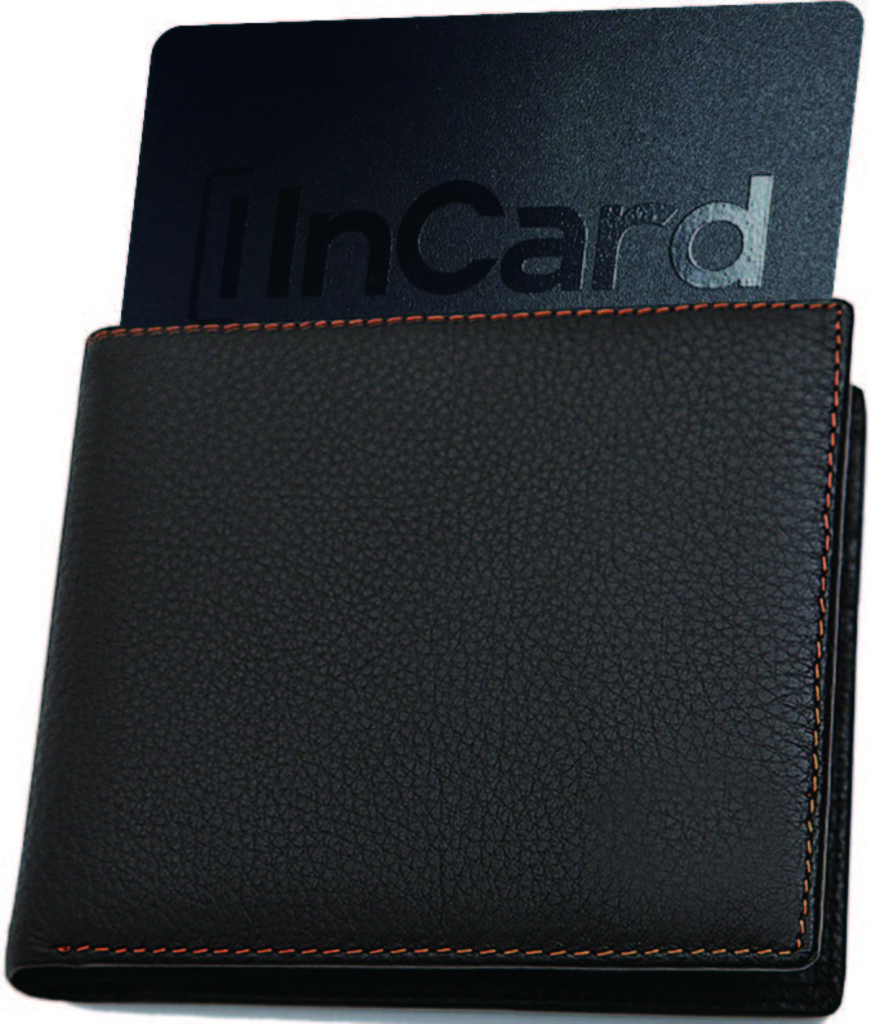
A key fob tracker sits on a hook by your door. You see it every day. Charging it is easy. A wallet tracker is different: it lives inside a folded piece of leather, usually inside a pocket, invisible until you need it.
That invisibility is the problem. Rechargeable trackers rely on you remembering to charge something you can't see. Most people don't. The tracker goes dead sometime between Tuesday and the day you board a flight, and you don't find out until you're already at the gate.
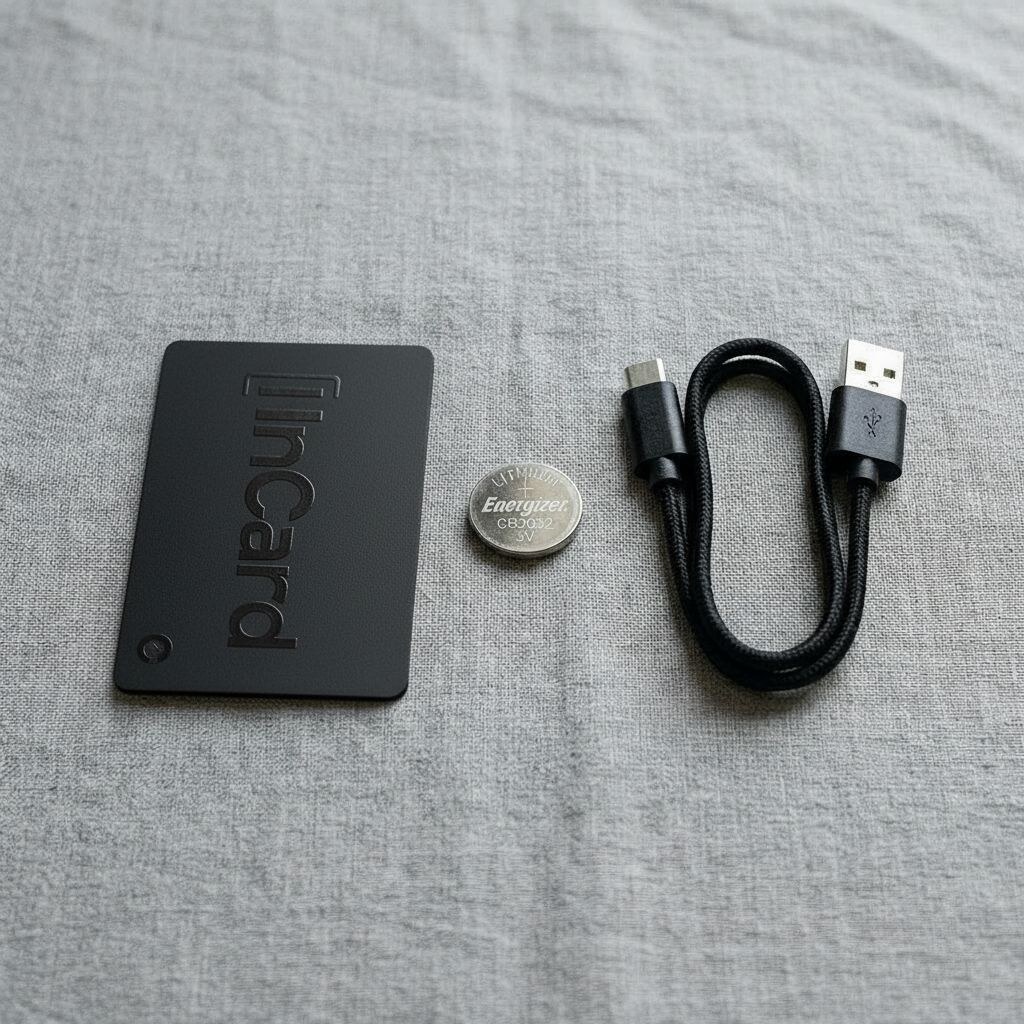
Replaceable-battery cards (the kind that take a CR2032 coin cell) solve the "can't charge it" problem partially — you can swap the battery — but CR2032s in a card tracker typically last 12 to 24 months depending on the network and device, which means you're doing a fiddly battery replacement roughly every one to two years, tracking down a specific coin-cell size, and hoping you didn't accidentally let it run flat first.
The Three Battery Approaches on the Market Right Now
Here's how the main wallet tracker battery types compare in practice:
| Battery Type | Typical Lifespan | Maintenance | Risk |
|---|---|---|---|
| Sealed non-rechargeable (InCard Finder) | Up to 5 yrs (Find Hub) / 3 yrs (Find My) | None until end of life | Replace the whole tracker eventually |
| Replaceable CR2032 (Tagigo, VibeTag, Chipolo) | 12–24 months | Annual-to-biennial battery swap | Runs flat unnoticed; fiddly to open |
| Rechargeable Li-ion (Carbon Finder) | Up to 6 months per charge (Carbon Finder); | Periodic charging | Dead mid-trip if forgotten |
A note on the rechargeable column: InCard's own Carbon Finder uses Qi wireless charging with a 155 mAh li-ion battery rated at up to six months per charge. That's a strong spec for a rechargeable card — better than most competitors — but it still requires periodic attention. The Carbon Finder exists for users who want the option to recharge rather than replace; the InCard Finder exists for users who want to never think about it.
For a direct comparison with Pebblebee's rechargeable approach, see our InCard Finder vs. Pebblebee comparison.
What "Sealed Lithium-MnO2" Actually Means
Lithium-MnO2 (lithium manganese dioxide) chemistry is not the same as the lithium-ion cells in your phone. It's engineered for long, low-drain applications — think medical devices, backup power systems, and high-reliability industrial sensors. Key properties that make it suited to a wallet tracker:
- Extremely low self-discharge. It holds its charge when idle, which is most of what a wallet tracker does.
- Stable voltage curve. It delivers consistent output almost until the end of its life, rather than fading gradually.
- No charge cycle degradation. Because it never charges, there's no cycle count, no battery "memory," no capacity loss over years of use.
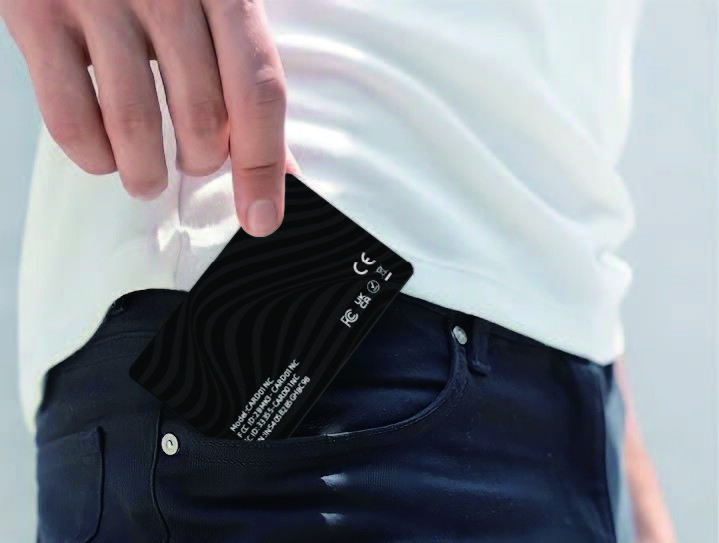
The sealed design means InCard Finder has no charging port. That removes a mechanical failure point, contributes to the IP68 waterproof rating (immersed at 1.5 m of fresh water for 30 minutes), and keeps the card at 1.7 mm — the same thickness as a standard credit card.
The Real Cost of "Cheaper" Battery Options
A CR2032 card tracker at $12 sounds cheaper than InCard Finder. Over five years, assuming periodic battery replacements at roughly $2–3 each, the gap narrows. More importantly, the actual cost isn't the battery — it's the attention tax.
Setting a yearly phone reminder to check your tracker battery is the kind of low-level maintenance that sounds trivial until it compounds across every device in your life. A sealed-battery tracker simply removes itself from that list entirely.
The end-of-life question is fair: when InCard Finder's battery finally depletes (at the five-year mark on Find Hub, three years on Find My), you replace the whole card. That's a genuine trade-off. At that point, you're buying a new tracker — but you've also had five years of zero maintenance, during which the competing rechargeable tracker user has charged their card roughly ten times and the CR2032 user has replaced several batteries.
When a Rechargeable Tracker Makes More Sense
Honesty first: if you're already good at charging things, a rechargeable card tracker isn't a bad choice. InCard's own Carbon Finder is worth considering if you:
- Want a carbon-fiber aesthetic
- Already have a Qi wireless charging pad on your desk
- Prefer the environmental profile of not replacing the tracker at end-of-life
The Pebblebee Card is also a legitimate dual-network rechargeable option; it charges via USB-C and is 2.8 mm thick. Where InCard Finder wins over Pebblebee: it's thinner (1.7 mm vs. 2.8 mm), rated IP68 vs. IPX6, and the sealed battery means you never have to touch it. Where Pebblebee wins: you can top it up rather than replace it at end of life. See the full breakdown at our Pebblebee comparison page.
InCard Finder Specs at a Glance
→ Get InCard Finder from $21.99
- Dimensions: 84.6 × 53 mm, 1.7 mm thick
- Battery: Sealed non-rechargeable Lithium-MnO2 — up to 5 years (Google Find Hub) / up to 3 years (Apple Find My)
- Network: Dual-network — Apple Find My or Google Find Hub (selected at setup; factory reset to switch)
- Waterproofing: IP68 — 1.5 m fresh water, 30 minutes
- Alert: 90 dB
- Bluetooth range: Up to 170 m (550 ft)
- No app, no account, no subscription — uses your phone's native Find My or Find Hub app
- Certifications: FCC, CE, UKCA, ISED, TELEC
Frequently Asked Questions
What happens when the battery in InCard Finder runs out? When the sealed battery reaches end of life — up to five years on Google Find Hub, up to three years on Apple Find My — the tracker stops working and needs to be replaced. There is no way to recharge or swap the battery. InCard offers a 12-month warranty and 30-day returns; battery depletion within the rated lifespan isn't a warranty issue, but the tracker arriving with a depleted or defective battery would be covered.
Why does battery life differ between Apple Find My and Google Find Hub? The two networks ping your tracker at different intervals and use different communication protocols. Apple Find My pings more frequently, which draws more power from the tracker's battery — resulting in the shorter three-year estimate. Google Find Hub's protocol is less power-intensive, extending rated life to five years. The tracker itself is identical; only the network's polling behavior differs.
Is a sealed battery wallet tracker better for travel? For most travelers, yes. A sealed battery means the tracker is at full power when you actually need it — at an airport, on a trip, months after you last thought about it. A rechargeable tracker requires you to have charged it recently. If you're a frequent traveler who would remember to charge it before every trip, a rechargeable card like InCard Carbon Finder is also a reasonable choice. If you travel occasionally and unpredictably, sealed is safer.
Does InCard Finder need its own app? No. InCard Finder works entirely through Apple's native Find My app (iPhone, iPad, Mac) or Google's native Find Hub app (Android). You don't create an InCard account. You don't download a separate app. You don't pay a subscription. Setup takes under two minutes via the native app on your phone.
The Bottom Line
Most wallet trackers ask you to remember something — to charge them, to swap their battery, to check they're still alive before a trip. InCard Finder doesn't. Its sealed Lithium-MnO2 battery lasts up to five years on Google Find Hub, it's IP68 waterproof, and at 1.7 mm it fits in any wallet without a bulge. If the value of a tracker is that it's always ready when you need it, then a tracker you never have to charge is a tracker that actually delivers on that promise.
→ Get InCard Finder from $21.99 at myincard.com